Global handheld smart camera shipments reached 16.65 million units in 2025, up 83% year-on-year — with the gimbal camera segment growing over 100%. Even more striking, gimbal camera shipments are projected to jump from 1.2 million units in 2023 to 14.8 million by 2026, a tenfold increase in just three years. DJI, Insta360, and GoPro collectively hold 93.7% market share, while smartphone brands including OPPO, vivo, and Honor have announced plans to enter this space.
What does this mean for camera module procurement teams and hardware engineers? As handheld smart cameras evolve from "geek toys" into the "second imaging system for everyone," module demand is shifting from a supporting role in the smartphone supply chain to a primary driver in its own category. Yet many procurement teams still apply smartphone module selection logic to handheld cameras — and that is exactly where the pitfalls begin.
The following three hidden thresholds are pain points we have repeatedly validated while serving multiple handheld imaging device clients.
Why it is a trap:The core selling point of handheld smart cameras is portability. Overall device thickness is often compressed to half or even one-third of traditional cameras. Yet users simultaneously demand 4K or even 8K resolution, large-format sensors, and optical image stabilization — meaning modules must pack higher-spec optical systems into smaller physical spaces.
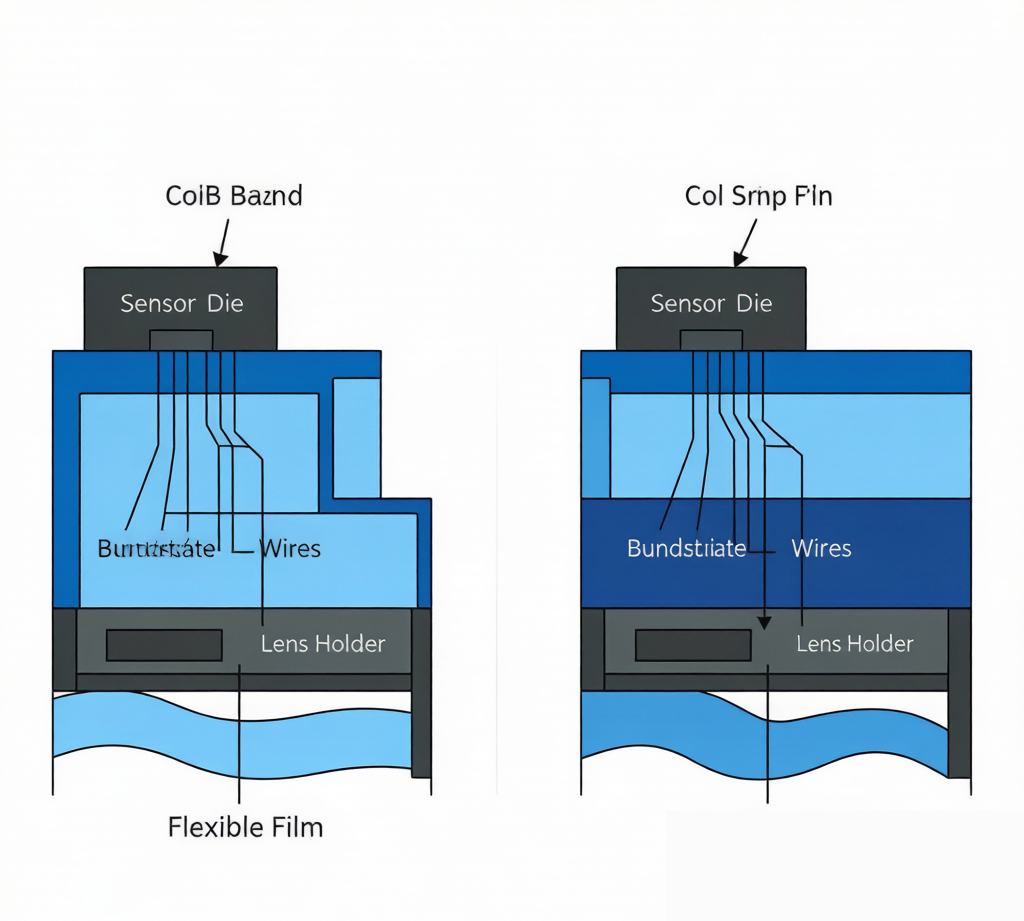
Where the trap lies:Many procurement teams focus only on sensor megapixels and module dimensions, overlooking how packaging process determines final yield. COB (Chip on Board) packaging achieves thin profiles but demands extremely high placement accuracy and wire bonding precision. COF (Chip on Film) saves Z-axis space by allowing flexible cable bending, but ultra-thin COF yield fluctuates significantly, with micro-cracks at bend points common during mass production. If a module supplier lacks mature hybrid COB-COF packaging capability, small-batch prototyping may pass smoothly, only to see yields drop from 95% to below 80% during volume ramp.
How to break it:Incorporate packaging process into your evaluation checklist at the selection stage. Require suppliers to provide yield comparison data for both COB and COF solutions, focusing on mass-production stability rather than lab data. Confirm whether the supplier has AA (Active Alignment) equipment — critical for ensuring high-megapixel module consistency. For products with extreme space constraints, prioritize FC-COB (Flip-Chip COB) solutions, which offer better balance between thickness and thermal management. Conduct a packaging feasibility review before project launch — it costs ten times less than firefighting during mass production.
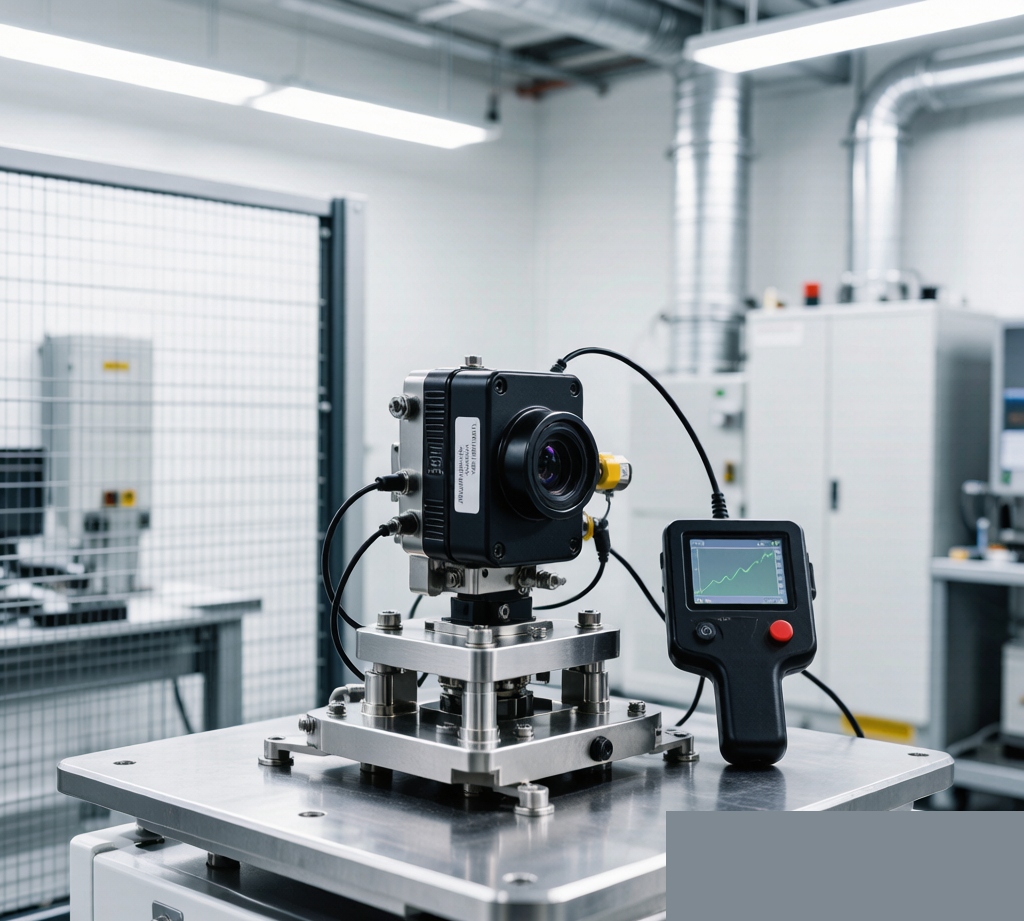
Why it is a trap:Handheld smart cameras inherently face harsher conditions than smartphones. Action cameras endure impacts and vibrations, gimbal cameras handle high-frequency micro-vibrations, and panoramic cameras face outdoor temperature and humidity swings. In these scenarios, module mechanical reliability fails more often than imaging performance.
Where the trap lies:Three failure modes are most common. First, AA alignment drift: modules pass accuracy at factory exit, but lens holders shift micrometrically after months of vibration, causing imaging decentration. Second, connector fatigue: internal wiring space in handheld devices is tight, and FPC bend radii often approach limits, leading to solder joint or connector contact failures under prolonged vibration. Third, thermal cycling failure: outdoor use involves large temperature differentials, and mismatched thermal expansion coefficients between materials cause lens debonding or filter cracking. These failures rarely surface in standard smartphone reliability testing, because smartphones experience far lower usage intensity.
How to break it:Procurement specifications must include handheld-scenario-specific reliability clauses. Vibration testing standards should exceed smartphone requirements — reference the action camera industry's random vibration spectrum, with acceleration levels increased by at least 50% over smartphone baselines. Require suppliers to provide AA post-alignment curing process documentation, confirming UV adhesive versus thermal curing, and post-cure displacement margins. For connectors, require bend-life testing data, and keep FPC bend radii no smaller than 1.5 times the supplier's recommended minimum. Thermal cycling tests should run -40°C to 85°C for at least 500 cycles, with mandatory post-test MTF (Modulation Transfer Function) re-measurement rather than visual inspection only. Most critically: involve suppliers in your reliability test plan review — their process knowledge can help you avoid 90% of issues proactively.

Why it is a trap:The handheld smart camera boom means brands are all racing against time-to-market windows, compressing the timeline from project launch to mass production to 6-9 months. Many teams sail through small-batch pilot production (hundreds to thousands of units) but hit yield cliff drops during volume ramp (100K+ monthly), with delivery delays and cost spikes.
Where the trap lies:The root cause of yield cliffs is rarely a single link but rather systemic process capability shortcomings that erupt under scaled production. Common issues include: placement machine precision drift during continuous high-volume operation, AA equipment alignment variance between different operators, incoming material batch consistency fluctuations causing cleaning and wire bonding parameter mismatches, and cleanroom cleanliness degradation under full-load production causing foreign-particle defect rates to rise. These problems are masked by "artisanal care" during small batches and exposed only at scale.
How to break it:Conduct process audits before selecting a supplier, rather than remediate after mass production problems emerge. Audit priorities: verify whether the production line runs an SPC (Statistical Process Control) system with key process Cpk above 1.33; check whether AA equipment has auto-compensation to reduce operator skill dependence; confirm IQC (Incoming Quality Control) processes with sampling or full inspection of critical dimensions; verify cleanroom classification and actual operating records match claims. Arrange a Pilot Run before mass production at 5%-10% of target monthly volume, focusing on yield trend stability rather than averages alone. When signing contracts, specify mass production yield guarantees and defect responsibility clauses — this matters more than price negotiation.
The handheld smart camera boom fundamentally demands more stringent requirements for camera module miniaturization, reliability, and mass-production capability than smartphones. Jinshikang Technology specializes in camera module OEM/ODM manufacturing, with comprehensive capabilities in COB-COF hybrid packaging, AA active alignment, motion-scenario reliability validation, and SPC mass-production control — providing handheld smart camera brands with end-to-end module solutions from selection through mass production.


AR0230---1/2.7 HD 2M Wide Dynamic
Fatigue Monitoring Camera Module
Motion DV Camera-720P-120 Degree Wide Angle Camera Module
Night Vision Monitoring Camera Module
Monitoring - Doorbell - Law Enforcement Instrument Camera Module
Ten Thousand Trillion Industrial Camera Camera Module
 13423810014
 0755-29433686
 daming@cameras-module.com
 2/F, Building H, Zhiyihan Industrial Park, Yuanling Village, Shiyan Town, Baoan District, Shenzhen 518108



We use cookies to enhance your browsing experience. Continuing to browse indicates that you agree to our cookie policy.