The latest supply-chain monitoring as of September 2026 shows that, as advanced-process CMOS image sensor capacity accelerates toward automotive ADAS and AI edge computing, lead times for mainstream industrial area-scan camera models have stretched from a historical 8 to 12 weeks to 22 to 26 weeks, directly disrupting the production-line commissioning rhythm of North American and Southeast Asian electronics manufacturing customers. For overseas OEM/ODM buyers and hardware engineers, the camera module is no longer an off-the-shelf item that arrives on order, but a supply-chain critical node that requires 6-month forward planning, multi-source sensor stocking, and deep coordination with a Chinese module factory. This article breaks down the four hidden pitfalls behind this cross-sector capacity scramble and the engineering paths to break through.
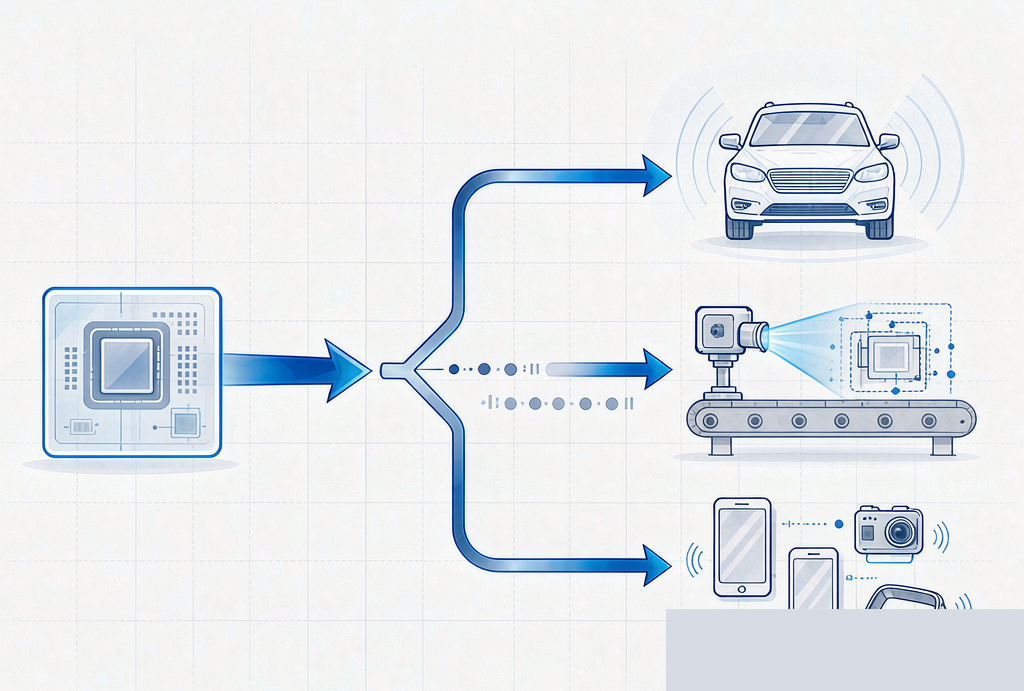
To understand the lead-time extension, first see the underlying logic of capacity allocation. The CMOS image sensor (CIS) is the core component of a camera module; production lines for advanced processes (advanced pixel technology and global-shutter architecture) are limited, and these lines simultaneously serve three customer groups: consumer electronics, automotive ADAS and LiDAR, and industrial machine vision. When automotive FMCW LiDAR and ADAS orders carry higher ASP, larger volumes, and safety-certification endorsement, sensor makers naturally tilt the capacity-allocation balance toward automotive, pushing industrial camera orders to the back of the queue. This is not a single vendor's strategic mistake but a capacity siphon from a high-ASP, high-safety-grade track toward a lower-ASP industrial track.
The most common mistake among overseas buyers is reusing the 8-to-12-week lead-time assumption from the past three years. When actual sensor lead times double to 22 to 26 weeks, POs placed on the original rhythm inevitably gap at the delivery window, forcing equipment integrators' FAT (Factory Acceptance Testing) and on-site SAT (Site Acceptance Testing) to slip, cascading delays across the entire production-line commissioning plan.
Step one: pull sensor allocation locking forward by six months, signing capacity-reservation agreements with the sensor originator or authorized distributor that specify quarterly call-off rhythm. Step two: sign an annual framework agreement with a Chinese camera-module factory, which centrally manages sensor procurement, AA packaging, and testing, consolidating the scattered sensor lead-time risk into a single traceable node. Step three: build a backup second source for sensors—Onsemi's same-generation global-shutter models, plus the back-illuminated global-shutter solutions Chinese makers are now mass-producing—as a price and lead-time buffer layer.
Under supply-chain pressure, Chinese module makers are accelerating domestic-substitute back-illuminated global-shutter sensor solutions with clear price advantages and shorter lead times, creating strong temptation for overseas buyers. But one key fact remains: as of September 2026, mainstream domestic-substitute models have not yet obtained EMVA 1288 Class A certification. EMVA 1288 is the camera-performance third-party measurement standard set by the European Machine Vision Association; Class A is its highest tier, covering independent endorsement of core metrics including quantum efficiency, dark current, dark noise, and response non-uniformity. Uncertified means parameter consistency, production yield, and long-term reliability lack third-party constraint.
Domestic sensor lab parameters can be impressive, but a huge gap exists between "lab parameters" and "mass-production CPK." Metrics such as dark-current temperature drift, pixel response non-uniformity, and bad-pixel distribution can fluctuate across production batches. If an overseas customer directly drop-in replaces the imported model with a domestic sensor without batch-level validation, color-reproduction drift, low-light noise exceedance, or even bad-pixel clusters causing unusable imaging may surface in mass production.
Require suppliers to provide an EMVA 1288 report or equivalent third-party test data; if none, run a small-batch pilot (200 to 500 units recommended) and compute CPK statistics on key metrics, listing any metric below CPK 1.33 on the risk register. For critical production lines, retain a dual-source structure with imported sensors primary and domestic secondary, introducing domestic sensors first in non-critical stations or spare-parts inventory, then gradually raising the primary-share ratio once mass-production data stabilizes.
Many buyers mistakenly believe swapping a sensor means "replacing one chip"; in reality the sensor is the starting point of the module imaging chain, and its replacement triggers a cascade of downstream revalidations. The sensor's spectral response curve, pixel serial readout timing, bad-pixel compensation algorithm, and ISP tuning mapping are all deeply bound to the specific model.
After a sensor change, the module factory's ISP tuning must redo the color-reproduction matrix, auto-white-balance, and demosaic algorithm adaptation; the lens-plus-sensor combined distortion calibration must rerun; and the AA (Active Alignment) compensation curve must recalibrate to the new sensor's pixel microstructure. Worse, if the customer specification locks the original sensor model, the change requires a fresh customer technical-approval process that can take weeks to months.
At the selection stage, require the module factory to provide a "sensor-agnostic" solution—a unified ISP abstraction layer that makes upper-layer algorithms transparent to the sensor model; templated calibration flows that only need a new parameter table imported rather than algorithms rewritten. Write the alternative-sensor validation responsibility split into the PO: the module factory handles AA and ISP revalidation, the customer handles end-equipment acceptance. This drops the cost of swapping a sensor from "redo the project" to "update a parameter pack."
Staring only at the camera body's lead time is another blind spot for overseas buyers. The extension propagates downstream along the supply chain, eventually blowing up in two places: the equipment integrator's commissioning rhythm and after-sales spare-parts inventory.

The FAT and on-site SAT windows of equipment integrators get eaten by sensor lead times; rushed acceptance-to-launch raises yield risk. The after-sales end is more covert—spares stocked on historical lead times fall badly short under the new 22-week lead time; once a line stops and spares are back-queued, downtime loss accrues by the hour.
Add "lead-time milestone + penalty" clauses to the procurement contract, writing the committed times for sensor arrival, module packaging, equipment integration, FAT, and SAT into the contract. Stock spare parts at 1.5x the new 22-to-26-week lead time (i.e., 33 to 39 weeks of usage), and sign a "rapid reorder" channel with the Chinese module factory specifying priority scheduling for urgent orders. This keeps the after-sales response buffered even as the primary lead time extends.
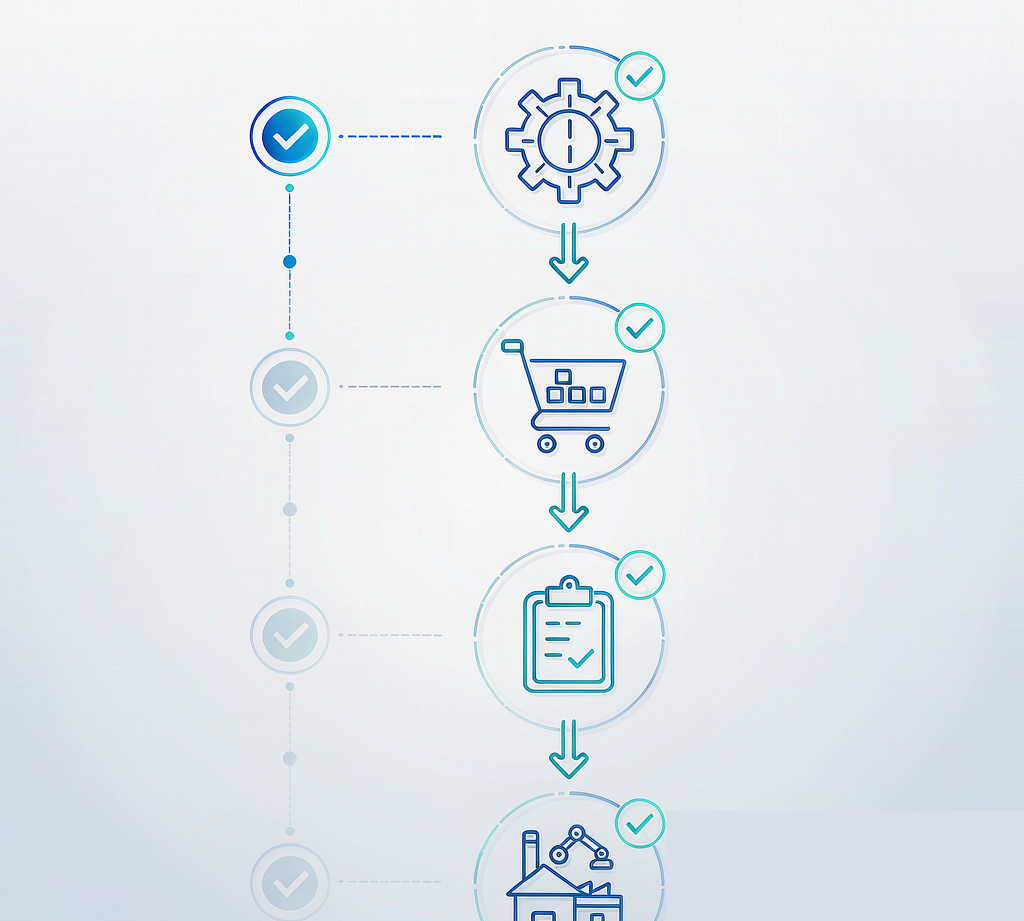
| Stage | Core Action | Risk Metric | Acceptance Threshold |
| Selection | Demand sensor-agnostic solution, ISP abstraction layer | Number of locked sensor models | 2 sources or fewer switch smoothly |
| Procurement | Lock sensor allocation 6 months forward + framework agreement | PO lead-time vs actual deviation | 10% or less |
| Pilot | Domestic sensor small-batch 200-500 units + CPK | Key-metric CPK | 1.33 or higher |
| Mass/After-sales | Spares at 1.5x new lead time + rapid reorder channel | No-spare downtime | 4 hours or less |
This CMOS sensor cross-sector capacity scramble is not a short-term fluctuation but a structural siphon from automotive ADAS and AI edge computing toward the industrial track; overseas buyers must shift from an "order-placement mindset" to a "capacity-planning mindset." JSK Technology (Jinshikang) has deep expertise in camera-module OEM/ODM across consumer, automotive, industrial, and medical scenarios, offering overseas customers controllable lead times and traceable quality in the sensor-capacity-scramble cycle through a Sony-plus-Onsemi-plus-domestic multi-source sensor architecture, AA precision-packaging lines, and automotive-grade reliability validation.
As of September 2026, supply-chain signals indicate this is a structural tilt of advanced-process CMOS sensor capacity toward automotive ADAS and AI edge computing, not a one-off logistics fluctuation. Overseas buyers should plan capacity on a 12-month-plus horizon as a long-term trend, rather than waiting for short-term recovery.
As of September 2026, mainstream domestic back-illuminated global-shutter solutions have not yet obtained EMVA 1288 Class A certification; parameter consistency and mass-production yield lack third-party endorsement. Use them as a second-source buffer first in non-critical stations and spare-parts inventory, then evaluate raising the primary share once mass-production CPK data stabilizes.
At minimum: ISP color-reproduction matrix and white-balance retuning, lens-plus-sensor combined distortion calibration, AA active-alignment compensation-curve recalibration, bad-pixel compensation algorithm adaptation, and—if the customer spec locks the original model—a fresh customer technical-approval process. A sensor-agnostic solution drops the cost from "redo the project" to "update a parameter pack."
Add "lead-time milestone + penalty" clauses writing committed times for sensor arrival, module packaging, equipment integration, FAT, and SAT into the contract; stock spares at 1.5x the new 22-to-26-week lead time (33 to 39 weeks of usage); and sign a "rapid reorder" channel with the module factory specifying priority scheduling for urgent orders.
Chinese module factories have full capability in multi-source sensor procurement, AA precision packaging, and automotive-grade reliability validation, able to centrally manage sensor procurement and packaging testing, consolidating scattered lead-time risk into a single traceable node; versus buying standard products directly from equipment OEMs, they offer higher customization flexibility, more controllable lead times, and sensor-agnostic solution design for overseas customers.


AR0230---1/2.7 HD 2M Wide Dynamic
Fatigue Monitoring Camera Module
Motion DV Camera-720P-120 Degree Wide Angle Camera Module
Night Vision Monitoring Camera Module
Monitoring - Doorbell - Law Enforcement Instrument Camera Module
Ten Thousand Trillion Industrial Camera Camera Module
 13423810014
 0755-29433686
 daming@cameras-module.com
 2/F, Building H, Zhiyihan Industrial Park, Yuanling Village, Shiyan Town, Baoan District, Shenzhen 518108



We use cookies to enhance your browsing experience. Continuing to browse indicates that you agree to our cookie policy.