On November 17, 2026, Foxconn Technology Group (Hon Hai) announced its plan to acquire Sony Semiconductor Solutions Corporation's (SSS) automotive camera module business for JPY 7.24 billion, covering related operations, technology, customer relationships, and operational resources, with closing expected by end of April 2027. On the surface, this looks like a routine asset acquisition. But for overseas OEM/ODM buyers sourcing camera modules for ADAS programs, it signals that the global automotive camera module supply chain is reshuffling — and reshuffle periods are exactly when procurement risk peaks. Sony divests module assembly to focus on upstream CMOS image sensor (CIS) chips; Foxconn takes over downstream manufacturing. The supplier relationships, capacity allocation, and certification qualifications in the middle layer are all being redistributed. If you are locking in automotive camera suppliers for 2027-2028 production programs, the last thing you should do is wait and see. The right move now is to audit every supply chain risk item by item.
Why it's a trap: From the acquisition announcement (November 2026) to closing (April 2027), there is a roughly six-month transition period, and post-closing capacity integration, team alignment, and customer interface migration may extend another 6-12 months. During this 18-month window, whether the original supplier's delivery commitments hold, whether production lines are retooled affecting capacity, and whether key account managers leave causing communication breakdowns are all uncertain.
Where the trap bites: The three most common disruptions during transition — first, production line retooling causes capacity gaps, and overseas mid-tier customer orders get deferred; second, Sony's original module engineering support team attrites or reorganizes, slowing response to technical issues; third, customer interface changes force buyers to rebuild supplier relationships, spiking communication costs. The more insidious risk: during transition, suppliers become conservative on lead-time commitments but don't proactively disclose it. Buyers assume the original schedule holds while it quietly slips.
How to hedge: First, specify transition-period delivery commitments in contracts or framework agreements — including lead time, volume, and price-lock clauses — with delay penalties. Second, require written confirmation of the post-closing order-fulfillment entity (Foxconn's Rayprus or the original SSS entity), technical support contacts, and quality complaint channels. Third, build a three-month safety stock for critical production programs, covering the most likely 1-2 month disruption window. Fourth, hold quarterly supply chain risk review meetings with suppliers, requiring disclosure of capacity ramp-up progress and customer handover status.
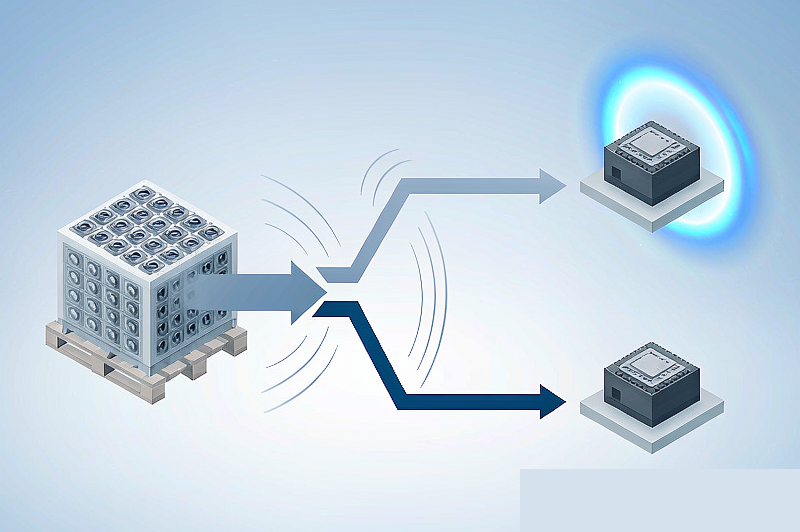
Why it's a trap: Post-acquisition, the new owner inevitably prioritizes capacity for strategic accounts. Foxconn's core goal in acquiring Sony's module business is to lock in Japanese OEMs (Toyota, Honda) for ADAS orders. Overseas mid-tier OEM/ODM orders get pushed to the bottom of the priority queue when capacity is tight.
Where the trap bites: Automotive camera module capacity is inherently limited — a single 8MP front-view module requires optical alignment, active alignment (AA) process, and calibration testing cycles that cannot be scaled as quickly as consumer electronics. Reshuffle-period line commissioning and process qualification further compress available capacity. Mid-tier customers have weak pricing leverage and passively accept lead-time extensions. Worse, many buyers only learn of capacity preemption by large accounts after their orders are already delayed, with no early-warning mechanism.
How to hedge: First, establish a dual-source strategy with at least two suppliers certified in parallel, splitting orders 70:30 or 60:40 to avoid single-point dependency. Second, tier orders across capacity tiers — Japanese/Korean majors for premium front-view/surround-view, Chinese module makers for cabin monitoring/rear-view/parking — using application segmentation to reduce capacity competition. Third, monitor Chinese module makers' capacity elasticity; Chinese makers have accelerated automotive-grade line investments and hold clear advantages in capacity absorption. Fourth, include capacity-priority clauses in framework agreements, clarifying delivery assurance differences between strategic and standard customers.
Why it's a trap: Sony sold the module assembly business but retained the CMOS image sensor (CIS) chip business. This means the deep binding between module makers and CIS vendors will loosen — module makers may no longer use only Sony CIS but select chips from onsemi, OmniVision, or SmartSens based on customer requirements. Swapping the heart of a module means re-doing interfaces and tuning.
Where the trap bites: Different CIS chips have significant differences in MIPI CSI-2 interface configuration, power sequencing, and ISP tuning parameters. Switching a module from Sony CIS to OmniVision CIS is not a simple chip swap — it requires redesigning PCB routing, adjusting lens-to-sensor optical matching, redoing ISP tuning, and repeating AEC-Q100 reliability testing. If an overseas buyer has locked into a single module maker whose CIS strategy changes post-acquisition, the buyer may passively accept an unfamiliar CIS, causing yield and imaging-consistency fluctuations in production.
How to hedge: First, specify acceptable CIS model ranges in procurement specifications (e.g., Sony IMX series, OmniVision OX series, onsemi AR series) — do not lock to a single chip. Second, require the module maker to provide multi-CIS platform-compatible designs, where the same module structure supports at least two CIS options, reducing redesign cost when switching chips. Third, evaluate the module maker's ISP tuning capability — can they independently complete image quality tuning rather than relying on the CIS vendor? This determines imaging pipeline controllability after a chip switch. Fourth, require CIS-switch change management procedures in PPAP documentation.
Why it's a trap: Automotive-grade certification (IATF 16949 system certification + AEC-Q100 component-level testing + PPAP production part approval) typically takes 3-5 years. But the global automotive camera supply chain can reshuffle every 2-3 years — Sunny ZhiXing filed its HKEX IPO prospectus in August 2026, Foxconn acquired Sony's module business in November 2026, Luxshare acquired Germany's Leoni, Samsung acquired ZF's ADAS business. Certifications remain valid while supplier entities have already changed.
Where the trap bites: When a certified supplier is acquired, the continuity of the original IATF 16949 certificate enters a gray zone — certificates are issued to specific legal entities, and if the entity changes post-acquisition, the certificate must be re-applied or transferred. Original AEC-Q100 test reports are based on specific production lines, processes, and teams; post-reshuffle line relocation or process changes require reassessing report validity. Many buyers assume certified supplier means problem solved, neglecting dynamic re-verification after reshuffling, only to discover in production that certifications have lapsed or no longer cover current lines.
How to hedge: First, require suppliers to proactively provide written notice of certification continuity arrangements when reshuffling or acquisition occurs, along with the latest IATF 16949 certificate and AEC-Q100 test reports. Second, periodically (recommended every six months) verify supplier PPAP file update status, monitoring Product Change Notices (PCN) and Engineering Change Notices (ECN). Third, build a dynamic supplier assessment mechanism that incorporates certification validity plus reshuffling-event-triggered re-verification into the supplier qualification process. Fourth, for new suppliers, require a complete certification package at the bidding stage — do not accept application-in-progress promises.
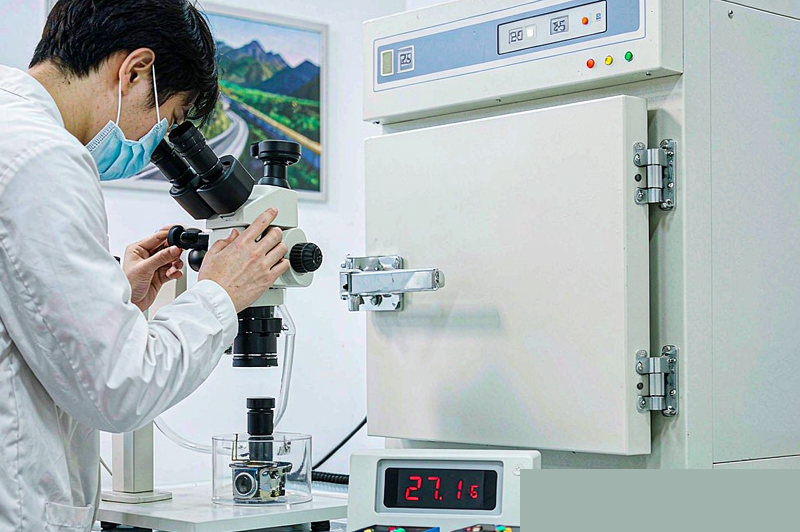
Why it's a trap: Overseas buyers have long relied on Japanese and Korean module majors, holding a low-price-low-quality stereotype about Chinese module makers and delaying backup certification. When Japanese and Korean supply destabilizes due to reshuffling, they discover no usable Chinese backup exists — completing automotive certification for a new supplier takes 1-2 years minimum, severely delaying program delivery.
Where the trap bites: Stereotypes cause many buyers to miss the capability upgrades Chinese module makers have achieved in recent years. In reality, leading Chinese module makers have broadly established IATF 16949 systems, with some lines passing AEC-Q100 testing, and have accumulated mature AA process and optical calibration capabilities in consumer electronics modules that are rapidly migrating to automotive. Sunny ZhiXing's automotive perception product gross margin was 31.4 percent in H1 2026 — down from 37.7 percent in 2023 but still in a reasonable industry range — indicating Chinese makers already have scaled automotive module delivery capability. Ignoring this trend means ceding supply chain flexibility to competitors.
How to hedge: First, conduct on-site audits of Chinese module makers' IATF 16949 system implementation (not just the certificate — verify system implementation), AEC-Q100 testing capability (in-house reliability lab or partnered lab), and PPAP delivery standards (complete submission per AIAG manual). Second, request overseas customer delivery cases (NDA-available anonymized cases), focusing on whether they have served European or American Tier 1s or OEMs. Third, run small-batch pilot production to validate yield and consistency, focusing on AA process precision, optical center-shift control, and imaging stability across high and low temperature environments. Fourth, assess their cooperation depth with major CIS vendors (Sony, OmniVision, onsemi) to confirm chip supply assurance.

Supply chain reshuffling is not a crisis — it is an opportunity to redistribute. Foxconn's acquisition of Sony's automotive module business is essentially a step in shifting manufacturing capability from Japan and Korea to Taiwan, China, while Chinese module makers' precision manufacturing and cost-control capabilities accumulated in consumer electronics are spilling over into automotive. For overseas buyers, rather than passively waiting for closing results during the reshuffle, the better move is to proactively bring Chinese module makers into the dual-source system and complete certification during the capacity-absorption window. Jinshikang Technology is deeply engaged in the camera module field, covering consumer electronics, automotive, security, and industrial inspection applications, accepting OEM/ODM orders with an IATF 16949 system foundation, providing stable automotive and industrial camera module delivery assurance for overseas customers.
Before closing (expected end of April 2027), SSS-related entities continue operations and customer service remains uninterrupted. However, the post-closing integration period (approximately 6-12 months) carries delivery uncertainty. Buyers are advised to specify transition-period delivery commitments in contracts and maintain safety stock.
If the legal entity remains unchanged post-acquisition, the certificate typically remains valid. If the entity changes or production lines are relocated, re-application or certificate transfer is required. Buyers should require suppliers to provide written notice of certification continuity arrangements when reshuffling occurs and periodically verify PPAP file update status.
Yes. A CIS chip change is a major Engineering Change Notice (ECN) requiring re-running AEC-Q100 component-level testing, optical matching verification, ISP re-tuning, and PPAP resubmission. It is recommended to specify acceptable CIS ranges in procurement specs and require module makers to provide multi-CIS platform-compatible designs.
Audit four key areas: IATF 16949 system implementation (not just the certificate), AEC-Q100 testing capability (in-house or partnered lab), PPAP delivery completeness (per AIAG manual), and overseas customer delivery cases (NDA-accessible). Pilot small-batch production to validate AA process precision and consistency.
Establish a dual-source strategy. Certify at least two suppliers in parallel, segmenting orders by application (front-view and surround-view to Japanese and Korean majors, cabin and rear-view to Chinese module makers) to reduce single-point dependency and complete backup certification during the reshuffle window.


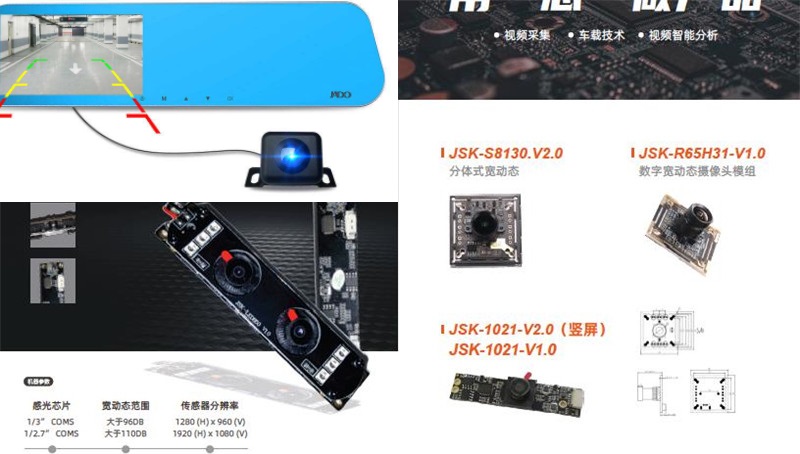
AR0230---1/2.7 HD 2M Wide Dynamic
Fatigue Monitoring Camera Module
Motion DV Camera-720P-120 Degree Wide Angle Camera Module
Night Vision Monitoring Camera Module
Monitoring - Doorbell - Law Enforcement Instrument Camera Module
Ten Thousand Trillion Industrial Camera Camera Module
 13423810014
 0755-29433686
 daming@cameras-module.com
 2/F, Building H, Zhiyihan Industrial Park, Yuanling Village, Shiyan Town, Baoan District, Shenzhen 518108



We use cookies to enhance your browsing experience. Continuing to browse indicates that you agree to our cookie policy.