On November 27, 2026, LG Innotek announced via its official newsroom a long-term agreement to supply 5-megapixel automotive camera modules for Amazon's autonomous driving subsidiary Zoox, marking the company's first mass production of camera modules for commercially deployed robotaxis. These are not test units — the modules are core components installed on ride-hailing vehicles in actual commercial service, with supply continuing for several years. This milestone signals that robotaxi has formally crossed from the road-testing phase into commercial operations, and the role of the camera module has shifted from an R&D validation part to an operations-critical component. For OEM/ODM procurement teams and hardware engineers sourcing camera modules, this means a fundamentally new selection logic: you are no longer just comparing specs, certifications and lead times — you are sourcing a component that must keep an unmanned vehicle running 24/7. This article outlines the five new traps that most commonly derail mass procurement of automotive camera modules under robotaxi commercial operations, and how to break each one.
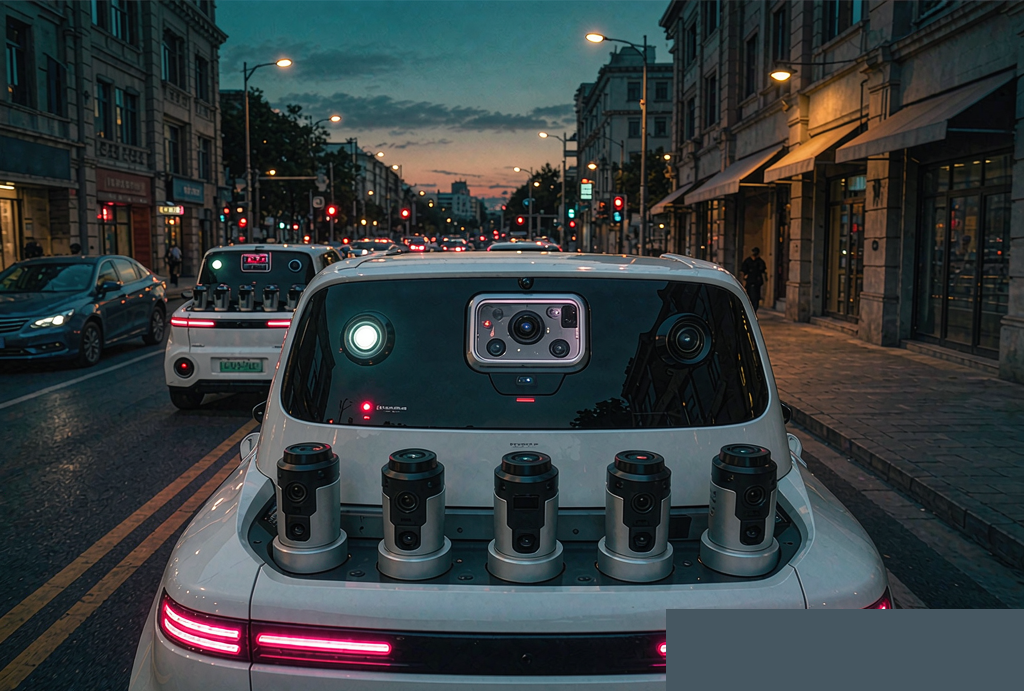
In conventional passenger-vehicle sourcing, a camera module that passes AEC-Q100 and meets the OEM's defined service life is considered acceptable. A private car owner drives one or two hours a day, a few hundred hours a year, in a relatively benign in-cabin environment. A commercial robotaxi operates 16 to 20 hours a day, accumulating 8 to 10 times the annual working hours of a private car. Critically, there is no driver — the moment a camera fails, the vehicle stops earning, and every hour of downtime is direct revenue loss.
Buyers who still apply the "certified = usable" logic will find modules degrading en masse after one to two years of operation: image quality decay, ISP drift, connector contact failures. These are issues that might surface once every few years on a human-driven car, but high-frequency operation accelerates them rapidly. More insidiously, conventional automotive life testing is built on a time-aging model, while robotaxi module aging follows a mileage-plus-duty-cycle model — over the same calendar period, a robotaxi module endures far more vibration cycles, thermal cycles and humidity cycles.
Robotaxi operators source vehicles on fleet economics: a car is expected to run continuously for 5 to 8 years before retirement, with no major overhaul in between. But most camera module suppliers still quote service life in the "passenger-car owner cycle of 3 to 5 years" denomination. When the two cycles do not align, operators face concentrated module degradation in years 3 to 4, forcing mass replacement at cost far exceeding plan.
The root cause is the denomination of the life definition. Passenger-car module life testing is typically benchmarked on "calendar time plus standard duty cycles," whereas robotaxi modules need a dual benchmark of "high-intensity duty cycles plus calendar time." Without duty-cycle-specific accelerated aging data, a supplier's "5-year life" may translate to only 2 to 3 years under robotaxi conditions. Buyers who map owner-cycle life promises onto fleet financial models will inevitably miscalculate.
| Dimension | Passenger-car sourcing | Robotaxi sourcing |
| Life basis | Calendar 3-5 years | Operating mileage 300k-500k km + calendar 5-8 years |
| Daily working hours | 1-2 hours | 16-20 hours |
| Aging model | Time-primary, cycle-secondary | Cycle-primary, time-secondary |
| Replacement strategy | Follows vehicle life | Preventive replacement at mileage milestones |
| Cost denomination | Single-vehicle BOM cost | Full-life TCO (incl. downtime loss) |
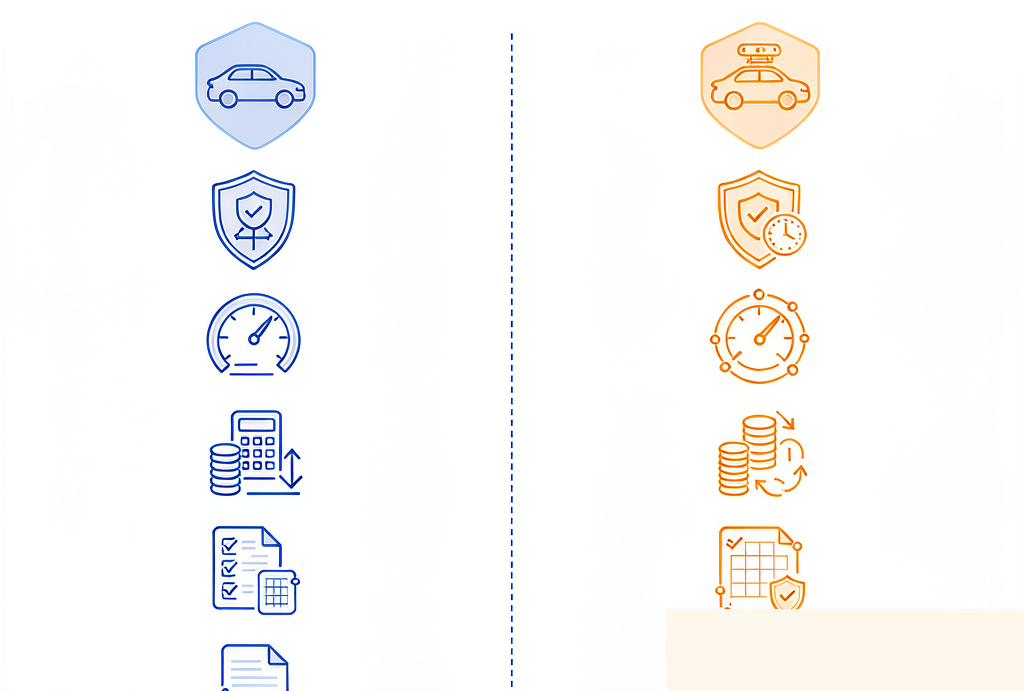
Buyers should require suppliers to re-issue life data on the right-column basis, and write "preventive replacement mileage milestones" into the sourcing contract so that module replacement is planned within fleet maintenance, not triggered by failure.
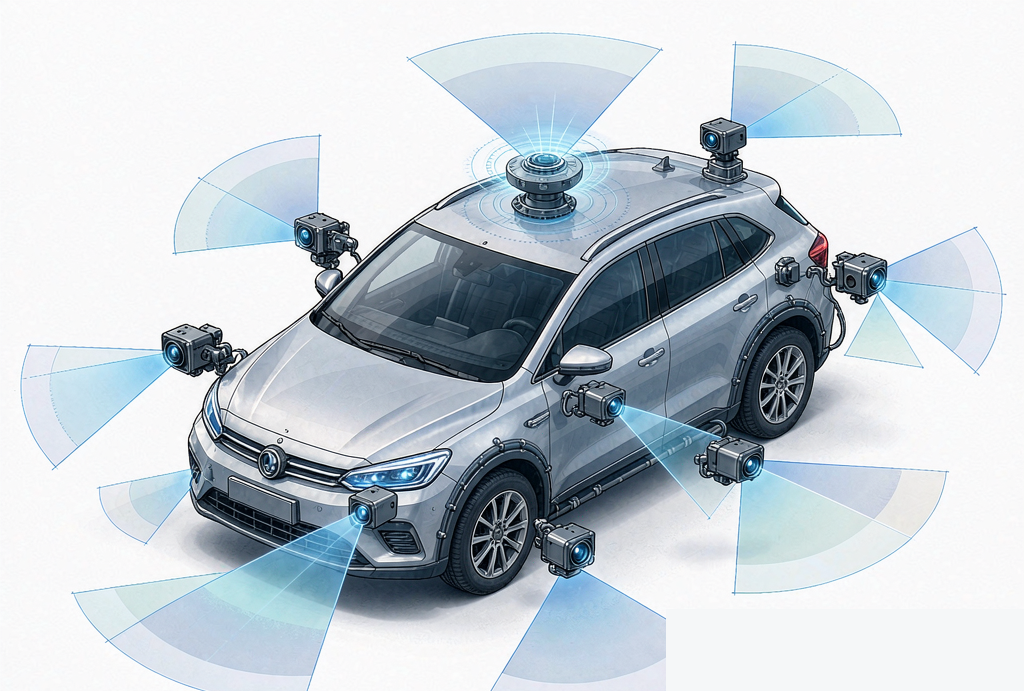
Commercial robotaxis commonly deploy 6 to 12 cameras forming a 360-degree redundant perception architecture, where every channel is a working sensor, not a backup. This is fundamentally different from human-driven cars where front-view is primary and surround-view is secondary. Under redundancy, a module can be individually in-spec yet still break perception fusion if it drifts from the other channels.
Conventional mass-production control checks "each module conforms to spec" — every parameter within upper and lower limits. Robotaxi demands "intra-vehicle multi-module consistency" — the intra-batch spread of white balance, exposure response, color reproduction and lens distortion must be tight enough. A classic failure: every module passes single-unit acceptance, yet after installation several channels show noticeably warmer color reproduction under backlight, causing the perception stack to identify the same vehicle across channels as different objects and trigger false positives.
The robotaxi buying decision is migrating from the hardware engineer at the OEM to the fleet operations and finance team at the operator. Operators do not ask "how many megapixels, what field of view" — they ask "how many extra rides per day, how many fewer downtime hours per year, what is the full-life TCO." A module supplier whose sales pitch is still spec-sheet-driven often cannot even get through the operator's door.
The core problem with spec-sheet thinking is equating "module performance" with "operational value." A higher-resolution, wider-HDR module looks better on paper, but if it is unstable at high temperature and frequently triggers thermal protection causing brief blackouts, it lowers availability and raises TCO. Conversely, a modestly specified but extremely duty-cycle-stable module may be exactly what the operator wants. Buyers led by spec sheets tend to pick "lab champions, operations runners-up."
Many buyers assume that once a module passes AEC-Q100 it is ready for in-vehicle commercial operation. But as a manned commercial service, robotaxi must in many regions also satisfy additional functional-safety and commercial-operations regulations. Automotive-grade certification answers "can this hardware go on a vehicle"; commercial-operations certification answers "can this vehicle legally carry paying passengers." They are not the same.
A typical pitfall: the module passes AEC-Q100 Grade 2, the buyer assumes compliance, and only after installation is told that local regulation requires the perception chain to meet ISO 26262 ASIL B or above, while the chosen module's ISP path was never functionally safety assessed — blocking the vehicle from obtaining an operating license. Another variant is regional divergence: a module certified in Country A is exported for operation in Country B, where local rules impose additional hard requirements on field of view, minimum illumination or color reproduction, forcing a re-selection.
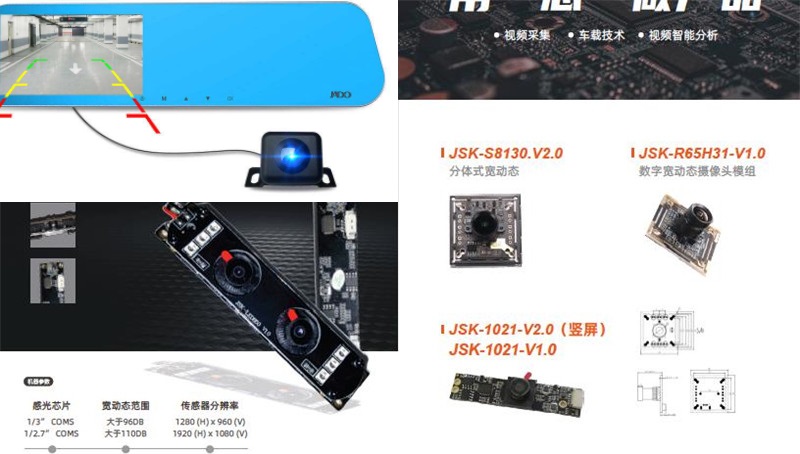
The curtain has risen on robotaxi commercial operations. The camera module has been promoted from an R&D validation part to an operations-critical component, and the procurement logic is shifting from spec-driven to operations-driven selection. JINSHIKANG TECHNOLOGY specializes in camera modules across consumer electronics, automotive, security and industrial inspection, serving OEM/ODM orders, and can support robotaxi and other commercial-operation vehicles with operations-scenario-based module selection and mass production. Overseas customers are welcome to contact us for collaboration.
The biggest difference is the reliability logic. Passenger-car modules are sourced on an "owner usage cycle" basis, operating one to two hours per day; robotaxi modules must support 24/7 commercial operation at 16 to 20 hours per day, with no driver, so module failure directly causes downtime revenue loss. Sourcing must shift from a time-based life metric to a dual metric of mileage life plus downtime rate.
Robotaxis typically run 6 to 12 cameras simultaneously for perception fusion, where no channel is a backup. Single-module conformance only means in-spec, but consistency drift across channels (white balance, color reproduction, exposure response) can cause perception algorithms to misjudge boundary scenarios. Mass production must include vehicle-level consistency pairing to keep intra-vehicle parameter spread within an agreed band.
Operators source on TCO (total cost of ownership), not single-module specs. A high-spec module that is unstable at high temperature and triggers frequent thermal protection blackouts lowers availability and raises TCO. Selection should model "per-kilometer perception cost," weighting stability, maintainability and consistency equal to or higher than megapixels and HDR.
Automotive grade (e.g., AEC-Q100) answers "can the hardware go on a vehicle"; commercial-operations certification answers "can the vehicle legally carry paying passengers." Robotaxis in many regions must also meet ISO 26262 ASIL functional safety levels and local ride-hail / autonomous-driving operating license requirements for perception hardware. Clarify three checklists before sourcing: automotive grade + functional safety + commercial-operations regulation.
For robotaxi, it should be a dual benchmark of operating mileage plus calendar time. A passenger-car promise of 3 to 5 calendar years may translate to only 2 to 3 years under robotaxi intensity. Require suppliers to provide image-quality decay curves at 100,000 km and 300,000 km milestones, and write preventive replacement mileage milestones into the sourcing contract.


AR0230---1/2.7 HD 2M Wide Dynamic
Fatigue Monitoring Camera Module
Motion DV Camera-720P-120 Degree Wide Angle Camera Module
Night Vision Monitoring Camera Module
Monitoring - Doorbell - Law Enforcement Instrument Camera Module
Ten Thousand Trillion Industrial Camera Camera Module
 13423810014
 0755-29433686
 daming@cameras-module.com
 2/F, Building H, Zhiyihan Industrial Park, Yuanling Village, Shiyan Town, Baoan District, Shenzhen 518108



We use cookies to enhance your browsing experience. Continuing to browse indicates that you agree to our cookie policy.