On November 6, 2026, Advantech launched UniCAM, billed as the industry's first cross-brand GMSL2 camera integration architecture, aiming to compress the multi-camera vision POC cycle for robots, humanoids, and Physical AI from weeks to days. On the same day, Vadzo Imaging introduced the Armor-246CRS-GMSL2, built on the Onsemi AR0246 sensor with 120dB HDR and on-sensor Adaptive Local Tone Mapping. Together these announcements point to one engineering reality: when a robot needs to carry four to eight GMSL2 cameras, likely from different suppliers, "can a single camera light up" is no longer the hard question. The real questions for procurement and hardware engineers are whether cameras from different brands can coexist, whether they can be synchronized at the frame level, and whether they can retain detail in 120dB high-contrast scenes. This article breaks down five integration pitfalls and how to navigate them.
Why it is a pitfall. GMSL2 (Gigabit Multimedia Serial Link 2) advertises a nominal forward rate up to 6Gbps, which seems ample for multiple HD streams. But teams that estimate "four 2MP cameras at roughly 1Gbps each totals 4Gbps, leaving 2Gbps headroom" often hit link instability late in integration.
Where the pitfall bites. First, protocol overhead, the reverse control channel, and forward error correction consume a meaningful portion of nominal bandwidth, so usable video payload bandwidth is noticeably lower than the headline figure. Second, GMSL2 runs over coax or shielded twisted pair, but signal attenuation grows with cable length, and long runs near motors, inverters, and switching power supplies trigger bit errors and link retraining. Third, stacking multiple uncompressed 2MP 8bit YUV422 30fps streams, plus reverse channel and overhead, can approach the single-link ceiling.
How to avoid it. During selection, run link stress tests with the real cable length and real electrical environment (close to motors and inverters) to confirm each camera's achievable output format and frame rate at the target distance. Reserve roughly 30% bandwidth margin per link. If total bandwidth approaches a single SerDes channel ceiling, consider multi-channel SerDes or compression rather than piling more cameras onto one link.

Why it is a pitfall. Advantech positions cross-brand GMSL2 integration as UniCAM's core value precisely because it has been a widespread pain point. To optimize cost-performance, Physical AI and robotics projects often pick a wide-angle from vendor A, an HDR from vendor B, and a near-infrared from vendor C. Each camera lights up on its own, but once multiple are online, addressing conflicts, timing errors, and even bus lockups appear.
Where the pitfall bites. Different GMSL2 camera vendors ship different default serializer/deserializer register configs, I2C slave addresses, power sequencing, and link training flows. Common failures include I2C address collisions that prevent the host from addressing each camera independently, or one camera's power sequence dragging down the whole bus. More subtly, some suppliers only provide a "lights up" default config without a full register map, leaving integrators unable to tune.
How to avoid it. Choose one of two paths. First, adopt a cross-brand GMSL2 integration layer like UniCAM that abstracts vendor config differences at the architecture level, suited for teams prioritizing POC speed. Second, lock to a single-source SerDes chipset family (for example, ADI GMSL2-based designs) at selection, and require suppliers in the purchase contract to deliver a complete register config table, I2C address remapping capability, and power sequencing documentation, so you never end up with a black-box module that merely lights up.
Why it is a pitfall. Vadzo's AR0246 advertises 120dB dynamic range, roughly equivalent to 20bit linear range. But most host displays and processing pipelines are 8bit (about 48dB), so the captured 120dB range must be tone-mapped down before use. Treating "sensor 120dB" as "output 120dB" misjudges the system's true information retention.
Where the pitfall bites. Global tone mapping applies one brightness curve across the whole frame, which keeps overall appearance consistent but flattens local contrast and loses shadow or highlight detail. Adaptive Local Tone Mapping (ALTM) adjusts regions separately to preserve detail in both shadows and highlights, but poor tuning produces halos around bright edges and unnatural brightness transitions. Critically, once the sensor performs ALTM on-chip, the host receives an already-mapped 8bit image; if the algorithm team needs the raw high-dynamic-range data downstream, they must confirm whether the sensor exposes a linear or raw output option, a detail frequently missed at selection.
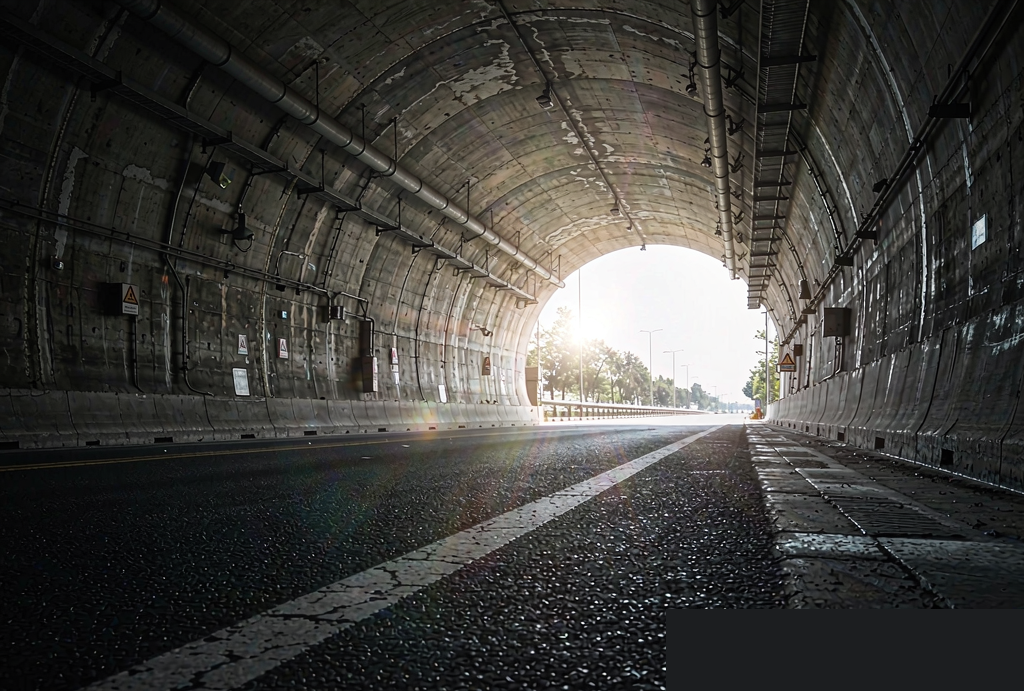
How to avoid it. Split the pipeline into "for humans" and "for algorithms." For humans, use on-chip ALTM 8bit output. For algorithms, confirm the sensor offers a linear/raw/HDR-interleaved output mode. Test ALTM halo boundaries and shadow detail retention in real high-contrast scenes (tunnel entrances with backlight, factory floors with strong light and shadow, direct headlights), not just lab stills.
Why it is a pitfall. Robotic vision, 3D reconstruction, and VSLAM require frame-level or even line-level synchronization across cameras. Otherwise, moving objects produce "ghosts" and parallax errors between viewpoints, directly corrupting depth estimation and pose solving.
Where the pitfall bites. Software-triggered cameras each expose independently, and USB enumeration, MIPI lane scheduling, and GMSL2 link training differences can produce frame-start offsets of several to tens of milliseconds, enough to break motion scenes. Even with hardware trigger support, the delay from trigger signal to first usable frame (sensor recovery + exposure adjustment + SerDes link establishment + host processing) must be measured, because it defines the "motion detected to image available" response window.
How to avoid it. At selection, prioritize GMSL2 modules that support external hardware trigger or master/slave sync, and require suppliers to provide typical and maximum trigger-to-first-frame latency. In POC, measure multi-camera frame-start offset with an oscilloscope and a moving target to confirm it meets your application's tolerable parallax threshold. For wake-on-motion low-power modes, separately measure recovery time from motion detection to first frame, so parking surveillance or security use cases do not miss critical moments.
Why it is a pitfall. Physical AI and humanoid robotics projects iterate fast, but GMSL2 automotive-grade or industrial-grade modules typically have long lead times. The most common POC bottleneck is not an algorithm that fails to converge, but camera samples that never arrive on time. Projects stall waiting for parts, not waiting for code.
Where the pitfall bites. Some module vendors only accept mass-production orders and offer no evaluation boards or small-batch samples. Others ship evaluation boards whose optics, interface, or mechanical footprint differ significantly from the production module, so POC conclusions cannot transfer cleanly into the production design. Or the core image sensor (such as AR0246 or IMX-series) is capacity-constrained, and the module vendor cannot commit to a stable lead time.
How to avoid it. Treat "evaluation board availability + small-batch supply capability + production part-number lock" as three equally important selection criteria. Prioritize suppliers who offer evaluation boards, reference designs, and production modules with consistent optics and interface across both phases. Restructure POC from "wait for production modules" into "validate algorithms on evaluation boards in parallel while locking production part numbers," so hardware validation and software iteration advance in parallel rather than serial waiting.

With deep expertise in camera module OEM/ODM manufacturing, our factory supports GMSL2, MIPI, and USB interface solutions, providing multi-camera integration evaluation modules and small-batch production support for robotic, automotive, and industrial vision customers, helping shorten the vision supply chain window from POC to mass production.
GMSL2 excels at long-distance transmission (coax or shielded twisted pair, several to over ten meters), resists electromagnetic interference, and suits deployments where cameras sit far from the host, common in automotive and industrial robotics. MIPI CSI-2 offers high bandwidth, low latency, and low cost, but short reach (typically centimeters to about one meter), suiting small robots or drones where the camera sits on or near the main board. If cameras distribute across the robot body and sit far from the host, prefer GMSL2; if cameras integrate in the head or a single board, MIPI is more appropriate.
No. 120dB refers to the sensor's captured linear dynamic range, roughly 20bit, but host displays and most processing pipelines are 8bit (about 48dB), so the range must be tone-mapped down. If the sensor performs Adaptive Local Tone Mapping on-chip, the host receives an already-mapped 8bit image, not the full 120dB. Algorithm teams needing raw high-dynamic-range data must confirm at selection whether the sensor offers a linear or raw output mode.
Not necessarily, but skipping it means more integration work. Common risks of cross-brand mixing include I2C address collisions, register config differences, and power sequencing mismatches. Teams with strong SerDes expertise can lock to a single GMSL2 chipset family at selection and require full register tables from suppliers to integrate themselves. Teams prioritizing POC speed can adopt a cross-brand integration layer like UniCAM to cut debugging cycles significantly.
GMSL2 nominal reach over coax or shielded twisted pair is several to over ten meters, but actual usable distance depends on cable quality, signal rate, electromagnetic environment, and whether equalizers are used. Long runs near motors and inverters trigger bit errors and link retraining. Selection should be based on link stress tests with real cable length and real electrical environment, not just datasheet nominal values.
Prioritize suppliers who simultaneously offer evaluation boards, reference designs, and production modules, and confirm the evaluation board matches the production module in optics, interface, and mechanical footprint so POC conclusions transfer cleanly. Restructure POC into a dual-track model: validate algorithms on evaluation boards in parallel while locking production part numbers, so hardware validation and software iteration advance together instead of serial waiting.


AR0230---1/2.7 HD 2M Wide Dynamic
Fatigue Monitoring Camera Module
Motion DV Camera-720P-120 Degree Wide Angle Camera Module
Night Vision Monitoring Camera Module
Monitoring - Doorbell - Law Enforcement Instrument Camera Module
Ten Thousand Trillion Industrial Camera Camera Module
 13423810014
 0755-29433686
 daming@cameras-module.com
 2/F, Building H, Zhiyihan Industrial Park, Yuanling Village, Shiyan Town, Baoan District, Shenzhen 518108



We use cookies to enhance your browsing experience. Continuing to browse indicates that you agree to our cookie policy.