On September 3, 2026, Chinese ADAS supplier ForwardTek announced a camera program award from a leading OEM: a single-vehicle 9-camera matrix (surround-view + 100°/60° side-view) for integrated driving and parking assist, with mass production in 2027. The news confirms a definitive trend: automotive cameras are moving from "single-camera-is-enough" to "matrix collaboration." For overseas OEM buyers and hardware engineers, the real question is not whether to adopt automotive cameras, but how to select a module supplier that can withstand automotive-grade reliability and guarantee mass-production consistency amid an industry-wide price war. This article outlines five selection pitfalls to help you avoid the common trap of great samples but failing mass production.
Published: September 4, 2026 | Last updated: September 4, 2026 | ⏱ Reading time: ~12 min | Tags: automotive camera selection, AEC-Q100, matrix, mass-production consistency, HDR
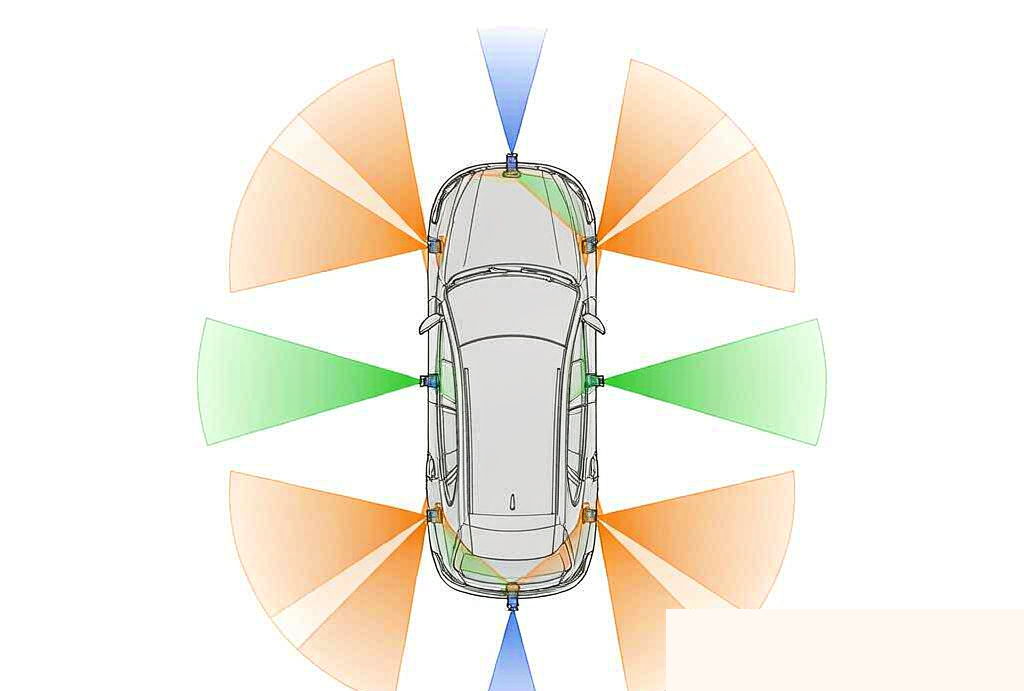
Automotive camera matrixization refers to an architecture where a vehicle deploys multiple cameras with different fields of view to collaboratively cover 360° perception. It is the hardware foundation of "driving-parking integration" (sharing one vision system for both driving assist and auto-parking). Industry data shows L2 vehicles typically carry 6-8 cameras, while L4 systems need 12+ (Source: 10jqka.com.cn, "China Camera Module Industry Panorama 2026-2030," Sept 3, 2026). ForwardTek's 9-camera program is a typical L2+ configuration. Together with the broader industry trend of "smart driving democratization: how camera module makers survive the volume-up cost-down era," matrixization is now reaching even 150,000 RMB-class vehicles.
Procurement takeaway: stop selecting by "single front camera." You need a packaged multi-camera solution (front/surround/side/rear/DMS), and the supplier must have system-level integration capability, not just single-module manufacturing.
Many OEM RFQs hardcode "8MP" but ignore that matrixization's core is FOV collaboration. Narrow FOV (e.g., 60°) sees far; wide FOV (e.g., 100°, surround 190°+) sees near and wide. Poor FOV configuration causes structural problems: distant targets missed, near-field blind zones wasting compute on overlap.
Classic failure: front camera uses narrow FOV + high megapixel, but all side cameras use the same spec, leaving large blind zones for low-speed parking; or insufficient overlap between surround and side cameras creates perception gaps only caught during vehicle calibration—at high rework cost.
Require suppliers to provide a complete FOV Coverage Map showing each camera's horizontal/vertical FOV, effective detection range, and overlap zones. ForwardTek's explicit surround + 100° + 60° configuration is a citable benchmark. Write "FOV Coverage Map" into the technical agreement as a mass-production deliverable.
AEC-Q100 is the stress-test qualification standard for automotive-grade ICs issued by the Automotive Electronics Council—the baseline for entering the OEM supply chain. But many suppliers claim "AEC-Q100 passed" verbally without specifying the grade (Grade 3/2/1/0) or failure details.
AEC-Q100 has four temperature grades: Grade 3 (-40 to +85°C), Grade 2 (-40 to +105°C), Grade 1 (-40 to +125°C), Grade 0 (-40 to +150°C). Front/side cameras usually require Grade 2+; engine-bay-adjacent positions need Grade 1. A supplier claiming "automotive certified" with only Grade 3 will suffer imaging drift, screen artifacts, or failure under extreme heat or cold-start—issues that surface only post-sale, damaging brand reputation.
Demand the full AEC-Q100 test report, checking three items: Temperature Cycling (TC) cycles and failures, HTOL duration, and MSL level. Also require IATF 16949 system certification and clear mapping of camera position to grade. This is the hard prerequisite for stable supply to overseas customers.
Mass-production consistency is the ability to keep optical parameters (focal length, FOV, distortion) and imaging parameters (brightness, white balance, color) stable across high-volume production—the core differentiator between automotive and consumer cameras. Chaodian智库 reported in Sept 2026 that the automotive camera industry is trapped in "extreme price pressure + technical homogenization," with some OEMs changing agreements and prices unilaterally, forcing suppliers to cut process margins and directly threatening consistency. This connects to our earlier analysis of "4 supply chain hurdles in the 8MP front-view 10-million-unit era": AA precision leap and ramp-up cadence are essentially the same engineering problem of "how to maintain consistency when volume explodes."
Classic failure: samples look perfect, but post-ramp focal length drifts, distortion exceeds spec, color varies batch-to-batch. Root causes: compromised AA (Active Alignment) equipment precision, loosened incoming-material tolerances, fewer calibration points—done to cut cost.
Quantify "consistency" as acceptance criteria: CPK ≥ 1.33 (key dimensions), focal-length batch variation ≤ ±2%, distortion batch variation ≤ ±3%. Require SPC (Statistical Process Control) daily reports and first/last-article inspection. Jinshikang Technology applies AA closed-loop calibration + 100% outgoing inspection in automotive module production, maintaining CPK above 1.33—the engineering answer to this trap.
HDR (High Dynamic Range) is the ability to simultaneously preserve detail in both bright and dark areas within a single frame. Night vision enhancement maintains usable imaging in low light via large pixels, near-IR illumination, and noise-reduction algorithms. In urban NOA (Navigate on Autopilot), tunnel entries, oncoming high beams, and unlit night roads are frequent; without HDR and night vision, even strong perception algorithms have "no data to work with."
Classic failure: lab lighting yields clear images, but real-world tunnel entries cause over/underexposure and target loss; night parking relying only on ambient light produces heavy noise and recognition collapse. ForwardTek's explicit HDR + night-vision support confirms these are standard requirements, not options.
Require wide-dynamic-range test video (tunnel entry, backlight, low-light night) with a dynamic-range value (recommend ≥ 120dB). For night vision, check near-IR sensitivity (QE at 800nm/850nm) and read noise. Write "no target loss in tunnel scenarios" into acceptance test cases.
PoC (Power over Coax) transmits video and power over a single coaxial cable, drastically reducing harness count. LVDS (Low Voltage Differential Signaling) is the high-speed video interface standard. Both are key to reducing harness complexity in multi-camera driving-parking integration. ForwardTek's PoC + LVDS + integrated-lens design reflects the mainstream engineering route.
Classic failure: module electrical interface mismatches the vehicle E/E architecture, forcing harness redesign at mass production and 3-6 months of delay; or PoC power ripple introduces image interference (horizontal lines), failing EMC testing at the OEM.
Require suppliers to provide interface specs + EMC pre-test reports, specifying PoC voltage range, ripple, LVDS rate, and BER. The vehicle E/E team must review connectors and harness routing early. Write "first-pass EMC pass rate" into supplier KPIs.
| Parameter | Consumer Camera | Automotive Camera (Driving-Parking) | Selection Check |
| Operating Temp | -20~+60°C | -40~+105°C (Grade 2) | Check AEC-Q100 grade report |
| Certification | None mandatory | AEC-Q100 + IATF 16949 | Check certificates & reports |
| FOV Config | Single fixed focus | Multi-FOV (60°/100°/190°+) | Require FOV coverage map |
| HDR Dynamic Range | 60-90dB | ≥ 120dB | Check tunnel test video |
| CPK Consistency | None | ≥ 1.33 (key dims) | Check SPC daily reports |
| Interface | MIPI | PoC + LVDS | Check EMC pre-test report |
| Lifetime | 1-2 years | ≥ 10 years / 150k km | Check HTOL duration |
The 2026 automotive camera market is projected at ~60 billion RMB, with potential to exceed 100 billion within three years (Source: Chaodian智库, Sept 2, 2026)—but collective industry losses are public fact. For overseas OEMs, pure price comparison is failing: the cheapest supplier is often the one that compromised on AA process, incoming screening, and consistency control. The sustainable selection logic: prioritize the supplier's automotive engineering capability (AEC-Q100 grade, IATF 16949 system, AA closed-loop calibration, SPC control), then evaluate price. Jinshikang Technology, deeply focused on camera modules across consumer electronics / automotive / security / industrial inspection, accepts OEM/ODM orders and delivers automotive-grade solutions from design to mass production. Overseas customers are welcome to reach out.
Authored by the Jinshikang Technology Technical Editorial Team. Jinshikang Technology has been deeply focused on camera modules for 15+ years, covering consumer electronics, automotive, security, industrial inspection, and AI vision. The company maintains IATF 16949 automotive quality system, AA closed-loop calibration processes, and CPK ≥ 1.33 mass-production control. It accepts OEM/ODM orders and provides automotive-grade solutions from design and prototyping through volume delivery.
Mass-production consistency. Good samples don't mean stable mass production. You must verify the supplier's AA equipment precision, CPK (recommend ≥ 1.33), and SPC reporting mechanism—the core differentiator between consumer and automotive modules.
The losses stem from OEM price pressure forcing suppliers to cut engineering margins, not from 8MP technology flaws. 8MP front cameras remain the mainstream high-end ADAS solution. Avoid "price-only" suppliers; prioritize those with automotive engineering depth.
Define the use case and installation position first: front, side, surround, rear, and DMS each have different FOV, frame rate, and HDR requirements. Step two is to specify temperature grade (AEC-Q100 Grade 2/1/0) and lifetime requirements (≥ 10 years / 150k km). Step three is the technical parameters: megapixel, frame rate, interface. Skipping scenario definition to compare megapixels first traps you in "great specs, wrong scenario."
Three hard metrics: ①AA equipment precision—ask whether they use 6-axis AA machines (±2 μm or better) vs 4-axis or 2-axis; ②CPK data—demand SPC daily reports for the last 3 months showing key-dimension CPK consistently ≥ 1.33; ③Multi-customer mass-production track record—IATF 16949-certified multi-model production history at the 10K / 100K / 1M unit tier. These three reveal real capability far better than a "client list."
It depends on perception task complexity: ①Mono suits basic ADAS like LDW/FCW, lowest cost; ②Stereo uses parallax for depth, suits mid-range target detection but requires tight lens alignment (high AA difficulty); ③Multi-camera matrix (9+ cameras) is mainstream for high-end ADAS and driving-parking integration, flexibly covering near and far. L2 typically uses mono/stereo; L2+ and L3 migrate to multi-camera matrix.
AEC-Q100 is the baseline, not the complete picture. You also need IATF 16949 quality system, full test reports (with temperature grade 0-3), and position-to-grade mapping (cabin/body/engine bay). Suppliers claiming "AEC-Q100 passed" without grade or reports should be treated with caution.
Driving-parking integration requires one vision system to support both driving assist (front, side) and auto-parking (surround, rear), each needing different FOV and detection range. Multiple cameras collaborate to cover 360°. L2 typically uses 6-8; L4 can exceed 12.
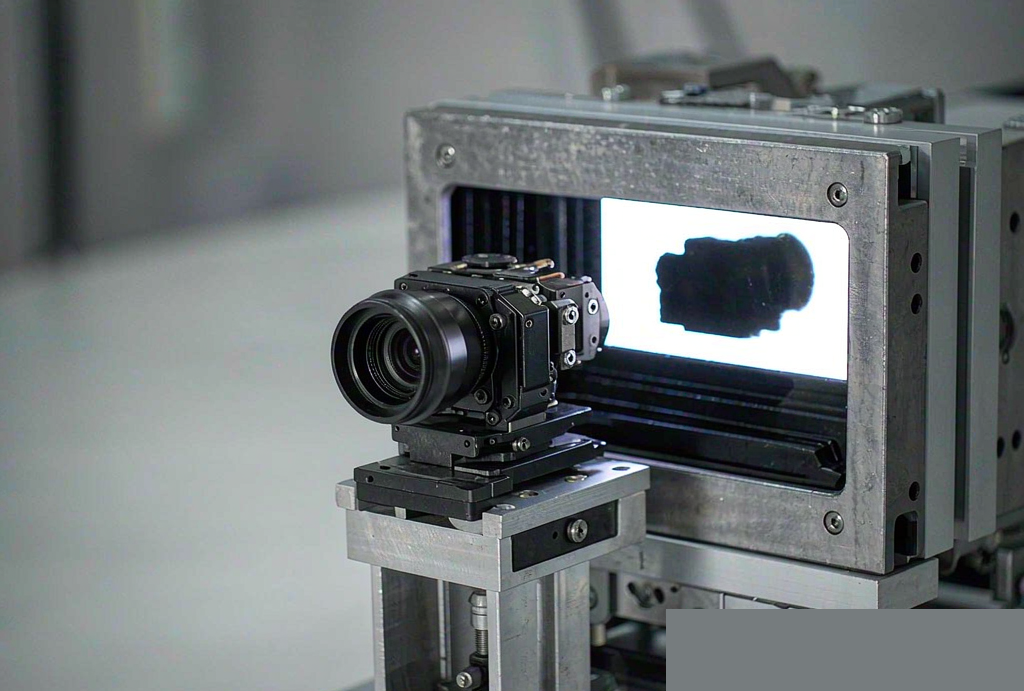
AA (Active Alignment) is the manufacturing process that precisely aligns the CIS sensor and lens across 6 degrees of freedom (X/Y/Z + pitch/yaw/roll) in automotive camera module assembly. AA precision directly affects imaging quality (MTF, image-side uniformity) and mass-production consistency. Consumer-grade AA precision is typically ±10 μm; automotive requires ±2 μm or better. AA equipment (6-axis vs 4-axis vs 2-axis), closed-loop calibration algorithms, and incoming-material screening precision are the three factors defining AA process capability—and the core engineering gap between consumer and automotive modules.
Global shutter exposes all pixels simultaneously—no motion distortion. Rolling shutter exposes row by row—causes "jello effect" (skew/warp) on fast-moving subjects. Automotive recommendations: front and side views can use rolling shutter (low cost, good HDR); DMS, AR-HUD, and robot vision must use global shutter (capturing blinks, expressions, gestures). Using rolling shutter for DMS significantly degrades driver-fatigue detection accuracy.
Two-layer correction: ①Optical layer—lens design (multi-element glass / glass-plastic hybrid) limits TV distortion to ≤ 3%; ②Algorithm layer—ISP or SoC lens distortion correction (LDC) reduces output distortion to ≤ 1%. Automotive acceptance: barrel/pincushion distortion ≤ 3% (optical), residual after correction ≤ 1% (algorithm). Recommend writing "uncorrected optical distortion ≤ ±3%" and "post-correction residual ≤ ±1%" into the contract, plus a checkerboard test report.
Three checks: (1) IATF 16949 system and multi-customer mass-production track record; (2) AA closed-loop calibration and 100% outgoing inspection; (3) clear capacity planning and inventory agreements. Jinshikang Technology provides all three for overseas due diligence.
Depends on product complexity and customization depth: ①Standard products (e.g., MIPI interface fixed-focus modules) MOQ typically 500-1000 units; ②Light customization (focal length change, interface swap) MOQ 2000-5000 units; ③Deep customization (automotive-grade new project) MOQ 5000-20000 units (tooling, AA program development, reliability validation). Overseas OEMs should negotiate a "small first order + rolling production" model to balance inventory risk and unit cost.
Typical phases: ①Sampling 4-8 weeks (form/structure/initial imaging); ②Engineering validation 4-6 weeks (MTF/color/distortion); ③Reliability validation 8-12 weeks (thermal/humidity/vibration/EMC); ④PPAP/line preparation 4-8 weeks (line build, SOP, first-article inspection); ⑤Mass-production ramp 4-8 weeks (small to large batch). Overall ~6-9 months. Using the supplier's existing platform can shorten 30-50%.
Three hidden costs to identify early: ①Certification cost—AEC-Q100 testing cycle 3-6 months, single round 100-300K RMB (depending on test count); ②Tooling cost—AA jigs, test fixtures, SMT stencils etc. one-time investment 50-200K RMB; ③Quality cost—rework/replacement/recall costs when defect rate exceeds spec. The contract should specify "mass-production defect rate cap" and "supplier-bearing ratio for excess," avoiding later disputes.
Four-step diagnosis: ①Check power supply—use oscilloscope to capture PoC/AVDD ripple; exceeding 50 mVpp spec triggers artifacts; ②Check MIPI/LVDS signal integrity—eye diagram, jitter, BER via oscilloscope; long trace or impedance mismatch causes black screen/artifacts; ③Check CIS soldering—reflow temperature profile drift causes cold joints / voids; ④Check ISP initialization sequence—firmware mismatch or power-on sequence errors cause init failure. Recommend building a "fault-root-cause-countermeasure" case library for direct reuse on new projects.
Three-layer countermeasures: ①Hardware selection—use CIS with low temperature coefficient (e.g., BSI backside-illumination) and athermal lenses (glass-plastic hybrid or all-glass); ②Structural design—add thermal pads between module and housing to keep CIS within spec; ③Algorithm compensation—ISP temperature lookup (OTP writes thermal curve), dynamically adjust white balance and focal-length calibration based on CIS temperature sensor. Stacking all three extends operating range from -20~+70°C to -40~+105°C (Grade 2 automotive).
Root cause is usually incoming-material variance + insufficient AA calibration. Solutions: ①Incoming control—AQL 0.65 sampling on CIS and lens key parameters (spectral response, transmittance); ②Line calibration—use standard color card (e.g., X-Rite ColorChecker) per module before shipment, burn calibration parameters into OTP; ③Batch traceability—build CPL (Component Part List) system to locate abnormal batches; ④CPK monitoring—white balance R/G/B channel deviation CPK ≥ 1.67 (stricter than typical 1.33). Recommend requiring monthly batch-consistency reports from the supplier.
Three-layer measures, easy to hard: ①PCB design—improve ground plane integrity, guard traces for key signals, impedance matching; ②Shielding design—add conductive foam or conductive adhesive to module housing for 360° shielding with the host enclosure; ③Filters—ferrite beads / common-mode chokes at power input, ESD protection devices on signal lines. Recommend requiring EMC pre-test reports (RE, CE, ESD) at the selection stage, not waiting until mass production—EMC rework cycles typically run 4-8 weeks and can severely impact project timelines.


AR0230---1/2.7 HD 2M Wide Dynamic
Fatigue Monitoring Camera Module
Motion DV Camera-720P-120 Degree Wide Angle Camera Module
Night Vision Monitoring Camera Module
Monitoring - Doorbell - Law Enforcement Instrument Camera Module
Ten Thousand Trillion Industrial Camera Camera Module
 13423810014
 0755-29433686
 daming@cameras-module.com
 2/F, Building H, Zhiyihan Industrial Park, Yuanling Village, Shiyan Town, Baoan District, Shenzhen 518108



We use cookies to enhance your browsing experience. Continuing to browse indicates that you agree to our cookie policy.